
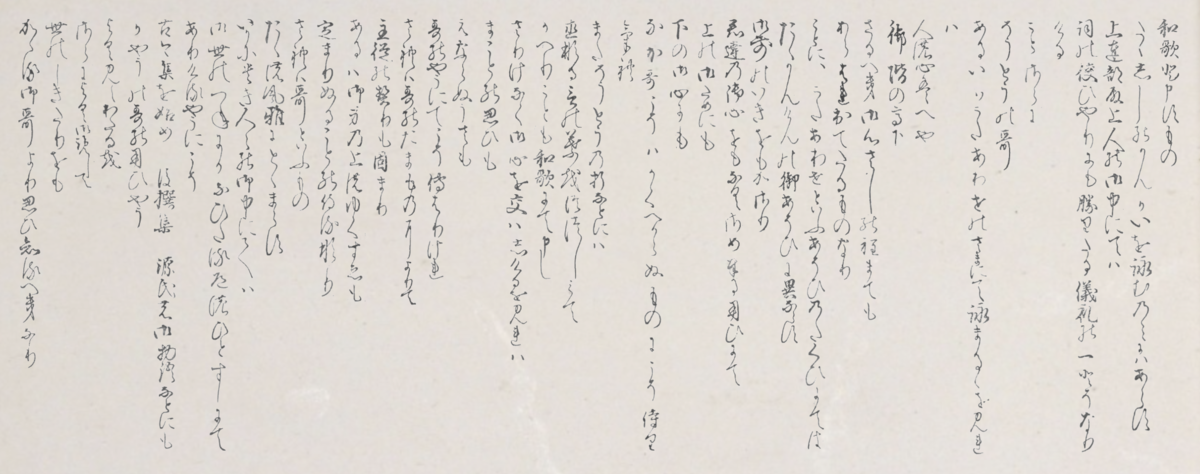
和歌と申すもの、ただ私事の感慨を詠むのみにはあらず、上達部・殿上人の御中にては、詞の使ひやりにも勝りたる儀礼の一とぞなりける。ことさらに、贈答の歌、あるいは歌合のさまにて詠まるるを見れば、人の心ばへや、御階の高下、さるべき御心ざしの程までも、あらはれ出でたるものなり。
ことに、歌合といふ遊びのたぐひにては、ただ管弦の御遊びに異ならず、御前の威儀をも飾り、君達の御心をも慰め奉る用ひにて、上の御ためにも、下の御心にも、なほ歌こそは欠くべからぬものにこそ侍りけれ。
また、贈答の折などには、直なる言の葉を慎みて、かへりごとも和歌にて申し、さりげなく御心を交はしけるを見れば、まことの思ひも、えならぬ憂さも、歌のやうにてこそ伝はりけれ。されば、歌のたまものによりて、主従の契りも固まり、あるは御身の上のゆくすゑも、定まりぬることの侍るなり。
されば、歌といふもの、たゞの風雅にとどまらず、いかに貴き人々の御中にては、御世のつねにかなひたる道の一筋にてありけるやうにこそ。
『古今集』を始め、『後撰集』『源氏の御物語』などにも、かやうの歌の用ひやう、よく見え渡るを、さらによく御覧じて、世のしきたりをも、かかる御歌より思ひ知るべきなり。
課題内容: 和歌が単なる私的表現ではなく、貴族社会においていかに儀礼的・制度的機能を持っていたかについて論ぜよ。とくに贈答歌や歌合の場における和歌の用法を中心に、歌によって築かれた人間関係や、階層的・政治的意味合いに焦点を当てて考察すること。『古今集』『後撰集』『源氏物語』などを参考にしてもよい。
和歌と儀礼の関係――贈答歌にみる社会的機能
和歌はしばしば、個人的な感情や自然観照を表現する抒情的文学として理解される。しかし、平安時代の貴族社会においては、それ以上に制度的・儀礼的な意味を色濃く帯びていた。とりわけ贈答歌は、単なる心情の交換にとどまらず、社会的秩序の維持や人間関係の調整、さらには政治的意図の表明といった多様な機能を担っていた。本稿では、『古今和歌集』『後撰和歌集』『源氏物語』などを典拠とし、和歌が儀礼の中でどのように用いられ、いかなる社会的意義を担っていたかを、制度・文化・思想の側面から明らかにする。
まず、贈答歌とは、ある人物が他者に和歌を贈り、それに対して返歌が詠まれる形式の歌である。このような和歌のやりとりは、日常的な交際や儀礼的な場面において頻繁に行われ、和歌が一種の社交儀礼として制度化されていたことを示す。『古今和歌集』「恋」巻には、男女間の贈答歌が多数収められており、恋愛感情とともに、身分差・距離・立場といった社会的背景が詠み込まれている。贈答という行為は、単なる言葉のやりとりにとどまらず、相手に対する敬意と関係性を構築する契機であり、贈答の有無・形式・返答の巧拙が、交際の成立可否や当事者間の上下関係を規定することもあった〔注1〕。
この儀礼的機能は『源氏物語』においてさらに明瞭に示される。光源氏が数多の女性と交際を深める過程において、和歌は常に重要な媒介として機能している。たとえば、藤壺や紫の上とのやりとりでは、感情の吐露とともに、和歌の交換が交際の正当性・儀礼性を裏づけている。返歌の有無やその質が、交際の成否や関係性の深度を測る基準となっており、形式を外れた和歌はしばしば無礼と見なされた〔注2〕。
『後撰和歌集』においては、さらに制度的な意味合いが強調される。たとえば、官人同士の間で交わされた贈答歌には、政治的配慮や地位確認の意図が読み取れる。この集の編纂に藤原氏の政治的影響力が反映されていることも鑑みると、和歌はもはや個人の詩的表現を超えて、支配秩序の再確認と構築に資する文化制度であったと言える。貴族社会において、和歌の詠み手は往々にしてその教養・教誨の程度を問われる立場にあり、その応答の巧拙が公的評価にも影響した〔注3〕。
儀礼の制度化が頂点を迎える例として、歌合(うたあわせ)を挙げるべきであろう。歌合とは、歌人たちが二陣に分かれて和歌を詠み、その優劣を審判によって競う儀式である。これは単なる文芸的遊戯ではなく、しばしば摂関家や天皇の主催のもとで行われ、参加者の地位や政治的影響力が問われる重要な公的行事であった。『源氏物語』「藤裏葉」巻における歌合の描写は、歌合が社会的地位や政治的影響力を公然と評価する場であったことを明示している。勝敗の結果は人事・恩賞にすら影響を及ぼすことがあったと考えられる〔注4〕。
このように、贈答歌および歌合に見られる和歌の制度化・儀礼化は、平安期の貴族社会における秩序形成の鍵を成していた。和歌は、感情表現の手段であると同時に、言葉を通じて社会的関係性を調整・形成する制度的手段であった。礼節・階層・権力関係が、和歌という文学形式を媒介にして表現・確認されたのである。
結論として、和歌は平安時代において単なる抒情詩の枠を超え、社会制度の一環として機能した。贈答歌や歌合に見られるように、和歌の交換は礼儀の実践であり、政治的秩序の演出でもあった。ゆえに、和歌の社会的役割を理解することは、平安貴族社会の実像に迫るうえで不可欠の視点を提供する。
【注釈】
〔注1〕贈答歌の儀礼性については、『古今和歌集』巻十一「恋歌一」や巻十二「恋歌二」に見られる初期交際段階の贈答歌が典型である。歌の往復によって関係が成立する。
〔注2〕『源氏物語』「桐壺」巻および「賢木」巻において、返歌のタイミングや表現の工夫が重要な意味を持っている。
〔注3〕『後撰和歌集』に収録された藤原実頼の歌などに、身分秩序と応答の技法が表れている。
〔注4〕『源氏物語』「藤裏葉」巻では、歌合における審判が参加者の地位を左右する描写がある。宮廷儀礼の場において、歌の巧拙が政治的評価に直結することを示している。
【参考文献】
- 『古今和歌集』、岩波書店、日本古典文学大系、1958年。
- 『後撰和歌集』、新編国歌大観、角川書店、1985年。
- 紫式部『源氏物語』、池田亀鑑校注、岩波書店、1950年。
- 久保田淳『和歌の力学――贈答・儀礼・制度』、東京大学出版会、2001年。
- 田中大士『和歌と中世社会』、笠間書院、1996年。
- 佐伯真一『王朝和歌の社会史』、講談社選書メチエ、2003年。
- 渡部泰明『古今集の時代』、岩波書店、2005年。
当サイトの内容、テキスト、画像等の無断転載・無断使用を固く禁じます。
Unauthorized copying and replication of the contents of this site, text and images are strictly prohibited.
Problem 3: The Relationship Between Waka and Ritual — The Social Function of Exchange Poems
by MUNAKATA Tagiri
Waka is often understood as a form of lyrical literature that expresses personal emotions or reflections on nature. However, in the aristocratic society of the Heian period, waka bore meanings far beyond the lyrical. In particular, the exchange of poems—zōtōka—fulfilled functions that extended well beyond the exchange of sentiments; they played a vital role in maintaining social order, mediating interpersonal relationships, and at times even articulating political intentions. Drawing upon sources such as the Kokin Wakashū, Gosen Wakashū, and The Tale of Genji, this essay explores how waka functioned within ritual contexts and the layers of social significance embedded within them.
To begin, it is necessary to clarify what is meant by zōtōka, or exchange poems. These are poems composed and sent from one person to another, often followed by a poetic reply. This exchange frequently took place in the context of daily interaction or formal ritual. For instance, the “Love” section of the Kokin Wakashū contains numerous such exchanges between men and women. These poems delicately navigate issues such as emotional intimacy, social rank disparities, and the barriers of time and space. The very act of sending a waka constituted a gesture of courtesy, and often served as a crucial step in forming or sustaining a relationship.
This ritual function of exchange poetry is particularly prominent in The Tale of Genji. In the narrative, Prince Genji exchanges waka with many women, such as Fujitsubo and Murasaki. These exchanges not only express romantic feelings but also function as a kind of social ritual that legitimizes their relationships. The structure is often the same: a relationship begins through the exchange of waka, and only upon receiving a reply does the relationship gain social recognition. It is worth noting that the absence of a reply—or a response deemed inappropriate in form or content—could result in the dissolution of the relationship or lead to social censure, as such a lapse would be seen as a failure of decorum.
In the Gosen Wakashū, we find even more formalized instances of such poetic exchange. This imperial anthology, deeply influenced by the political ascendancy of the Fujiwara clan, demonstrates how waka were far from mere personal expression—they were embedded in the fabric of political and social institutions. For instance, when a poem was sent from a senior noble to a junior one, the recipient’s poetic response served as a measure of both their refinement and their political positioning. In this way, waka functioned quite literally as a “battleground of words,” facilitating political maneuvering and negotiation through poetic means.
The uta-awase (poetry contests) are another example that illustrates the ritualized and social nature of waka. These contests, in which poets were divided into opposing teams and composed poems in response to designated topics, were often held under imperial or regental patronage. In the “Fujibakama” chapter of The Tale of Genji, we see such a poetry contest in vivid detail. There, not only the poetic skill of the participants but also their social status was evaluated through the process of judgment. These contests were thus not mere aesthetic performances but part of the political ritual order, and the outcomes could even influence court appointments and honors.
Taken together, these examples reveal that waka—particularly in the forms of exchange poems and poetry contests—served important social and political functions within the aristocratic world of the Heian court. Far beyond the expression of sentiment, waka was a means of maintaining decorum, affirming social hierarchies, and signaling political affiliations. It is for this reason that waka became deeply enmeshed within court rituals and was considered an essential part of the cultural literacy expected of the elite.
In conclusion, waka functioned in the Heian period not merely as a vehicle for private expression, but as a powerful medium of social and institutional communication. Exchange poems and poetry contests exceeded the bounds of poetic form to mediate relationships and uphold the structure of society itself. Thus, to understand waka is to understand the very texture of Heian political and cultural life.
![山家集【電子特典付き】【電子書籍】[ 西行 ]](https://thumbnail.image.rakuten.co.jp/@0_mall/rakutenkobo-ebooks/cabinet/2634/2000006992634.jpg?_ex=128x128 "山家集【電子特典付き】【電子書籍】[ 西行 ]")
- 価格: 638 円
- 楽天で詳細を見る
![『紫式部集』歌の場と表現【電子書籍】[ 廣田收 ]](https://thumbnail.image.rakuten.co.jp/@0_mall/rakutenkobo-ebooks/cabinet/8211/2000002498211.jpg?_ex=128x128 "『紫式部集』歌の場と表現【電子書籍】[ 廣田收 ]")
- 価格: 9900 円
- 楽天で詳細を見る
![ころころ古事記 ゆる神様の神社ナビ【電子書籍】[ 松尾 たいこ ]](https://thumbnail.image.rakuten.co.jp/@0_mall/rakutenkobo-ebooks/cabinet/6491/2000008786491.jpg?_ex=128x128 "ころころ古事記 ゆる神様の神社ナビ【電子書籍】[ 松尾 たいこ ]")
|
|

PR
